Private Duty Nursing in Houston: Costs, Coverage & When to Use It
Home Care Directory Editorial TeamMay 25, 2026
Private Duty Nursing in Houston: Costs, Coverage, and When to Use It
Families searching for private duty nursing in Houston are usually trying to solve a problem that standard home health doesn't fully solve. A patient may need more overnight support. A discharge from the Texas Medical Center may feel too clinically intense for short visit-based care. Or a family may want one-on-one nursing continuity at home without moving immediately into a facility setting.
This guide explains what private duty nursing means in the Houston market, how it differs from concierge nursing and standard home health, what it costs, and when families should ask agencies about RN or LVN shift care.
Quick answers
What is private duty nursing?
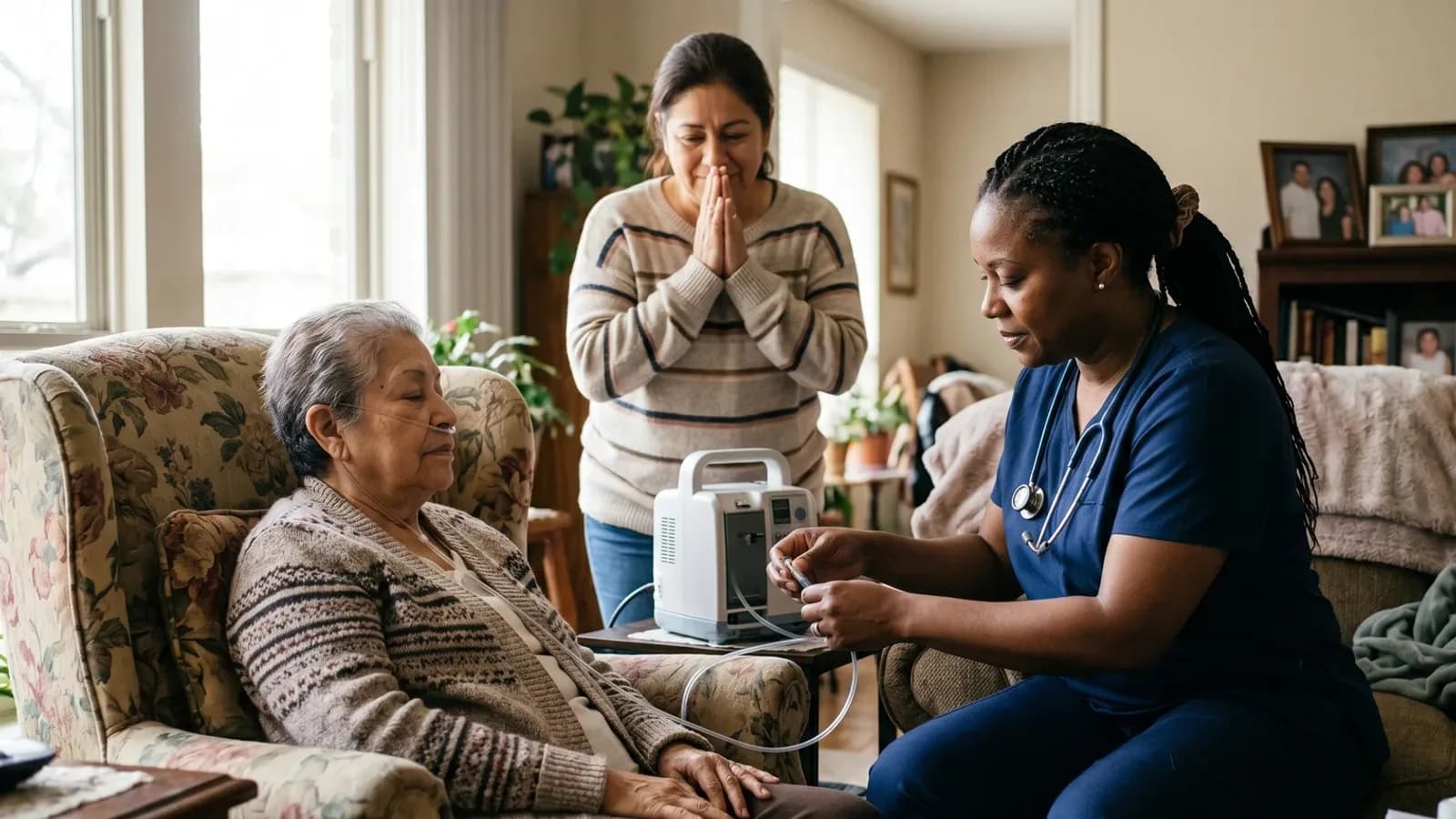
Private duty nursing is one-on-one nursing care delivered in the home for extended blocks of time - typically 4 to 12 hour shifts - by an RN or LVN. It's commonly paid privately, though some pediatric and Medicaid programs cover portions of it.
How is it different from concierge nursing?
Private duty nursing emphasizes shift-based skilled care: a nurse covers a defined block of hours and handles medical tasks. Concierge nursing is broader and more relationship-based - an RN coordinates specialists, attends appointments, and provides on-call oversight. See our guide to concierge nursing in Houston for the full distinction.
How is it different from standard home health?
Standard home health is visit-based and intermittent - a nurse comes for 30 to 60 minutes, performs a task, and leaves. Private duty nursing is continuous - a nurse stays for the full shift.
Does Medicare cover it?
Generally no, not for extended shift-based nursing at home. Medicare covers qualifying intermittent skilled home health visits, but not ongoing private duty shifts. See
Continue Comparing Care Options
Use the directory paths below to move from research into a short list of Houston-area providers.
Hourly rates typically run $45-$70 for LVN coverage and $70-$100+ for RN coverage, with overnight, weekend, and pediatric care priced separately. See the cost section below for the full breakdown.
What private duty nursing actually means
Private duty nursing means a nurse is assigned to one patient for a meaningful block of time at home rather than coming for a brief scheduled visit. Depending on the case, that nurse is an RN or LVN (Licensed Vocational Nurse, the Texas equivalent of LPN).
Common clinical tasks include:
Medication administration beyond reminders, including injections and IV
Tracheostomy or ventilator support
Tube feeding oversight (G-tube, J-tube, NG)
Wound monitoring between provider visits
Post-surgical clinical observation
Seizure monitoring
Respiratory support
Complex chronic-condition management
Overnight nursing for medically fragile patients
Catheter and ostomy care
Pain management for advanced chronic conditions
In Houston, you may also hear related phrases:
Private nurse
In-home RN care
Extended-shift nursing
Private-pay skilled nursing
High-acuity home care
Continuous skilled nursing
Pediatric private duty nursing (PDN)
These phrases overlap, but they don't always mean the same thing. Families should ask exactly what clinician is being sent, for how long, under what supervision, and which Texas HCSSA license category the provider holds. See our guide to Texas HCSSA licenses.
Private duty nursing vs. standard home health
This is one of the biggest points of confusion.
Standard home health is intermittent. A nurse visits, performs a specific skilled task, documents the visit, and leaves - usually 30 to 60 minutes per visit, two or three times per week. That model works well for many recovery plans and is the model Medicare and most insurance is designed around.
Private duty nursing is different. It's designed for situations where a patient needs continuous skilled attention, ongoing observation, or hands-on clinical support during longer periods than short home health visits can cover.
Families typically step up from standard home health to private duty nursing after:
A difficult hospital discharge with significant ongoing clinical needs
Private duty nursing vs. concierge nursing in Houston
Families also mix up private duty nursing and concierge nursing because both involve private-pay skilled support at home. The difference is in the service model.
Private duty nursing typically looks like:
Extended nursing shifts (4, 8, or 12 hours)
Task-heavy clinical support
Bedside-style one-on-one care
Agency staffing with backup coverage
Clearer separation between shift care and case management
Hourly billing
Concierge nursing typically looks like:
Relationship-based RN support
Specialist coordination
Appointment accompaniment
Close family communication
Flexible scheduling or retainer-style availability
Higher hourly rates or monthly retainer pricing
Some Houston providers blur the line, especially in higher-income parts of the city like River Oaks, the Galleria, Memorial, and West University. In practice, many families benefit from comparing both when they want medically sophisticated home care that goes beyond standard aide coverage.
When Houston families choose private duty nursing
1. Complex post-discharge recovery
Houston families often reach for private duty nursing after a discharge from the Texas Medical Center, Memorial Hermann, Houston Methodist, or a major specialty program when the patient is home but clinically fragile. MD Anderson post-treatment recovery is a particularly common driver - oncology patients sometimes need extended skilled observation during specific phases of treatment.
2. Overnight clinical support
If the issue is not simply needing someone present, but needing someone clinically capable overnight - to manage vent settings, suction, administer medications, or respond to seizure activity - private duty nursing is the appropriate level of care, not standard overnight caregiving. Families comparing options should also read 24-hour home care in Houston.
3. Pediatric skilled care
Private duty nursing is especially important in pediatric home care, where children discharged from Texas Children's Hospital may need extended in-home skilled support for airway management, feeding, seizures, or other complex conditions. Pediatric private duty nursing is one of the few private duty categories with meaningful insurance coverage through Texas Medicaid pediatric programs.
4. High-acuity care at home
Some families are trying to avoid repeated hospital trips or keep a loved one at home through a clinically difficult stretch. That's where RN or LVN shift care enters the conversation - typically as part of a broader care plan that may include physician oversight, palliative care, or hospice.
What private duty nursing costs in Houston
Private duty nursing is one of the more expensive home-based care options because you're paying for licensed clinical labor for extended blocks of time.
Typical Houston-area ranges:
LVN private duty nursing: $45-$70 per hour
RN private duty nursing: $70-$100+ per hour
Pediatric private duty nursing: Similar RN/LVN ranges, sometimes higher for complex cases
Overnight premium: Typically 10-25% above daytime rates
Weekend and holiday premium: Often 10-25% above weekday rates
High-acuity care (vent, complex wound, advanced cardiac): Upper end of the RN range or above
Rates vary based on RN vs. LVN staffing, daytime vs. overnight, weekday vs. weekend, pediatric vs. adult, skill intensity, shift length, and whether the provider is agency-based or independent. Get quotes from two or three agencies before deciding - published rates are starting points, not commitments.
For a 12-hour overnight RN shift seven days a week, monthly costs can reach $22,000-$36,000+. This is real money, which is why most families consider private duty nursing for time-limited situations (post-discharge recovery, end of life, pediatric stabilization) rather than indefinite long-term arrangements.
Does insurance cover private duty nursing?
Coverage is the part most families find surprising.
Medicare generally does not pay for ongoing extended private duty nursing shifts in the home. Medicare is built around qualifying intermittent home health (skilled nursing visits up to about 8 hours per day, 28 hours per week, under specific homebound and skilled-need criteria). Continuous shift-based private duty nursing falls outside that.
Texas Medicaid has different rules for pediatric and adult cases:
Pediatric private duty nursing is one of the most established Medicaid-covered services in Texas. Eligible children with complex medical needs can receive extensive private duty nursing through Texas Medicaid pediatric programs.
Adult private duty nursing through Medicaid is more limited. STAR+PLUS and certain waiver programs may cover some in-home nursing depending on the program, assessment, and authorization.
Private health insurance varies significantly. Most plans cover intermittent skilled home health similar to Medicare. A small subset of plans cover private duty nursing with prior authorization for medical necessity.
Long-term care insurance is the most common private payer for adult private duty nursing. Policies typically cover home-based skilled nursing once benefit triggers (usually 2+ ADL impairments or cognitive impairment) are met. Many Houston families - particularly in Memorial, the Galleria area, and other established neighborhoods - have legacy LTC policies from the 1990s or early 2000s that cover home care generously.
VA benefits cover some home-based skilled nursing through the Michael E. DeBakey VA Medical Center and VA community care, and the Aid & Attendance pension can help fund private duty nursing out-of-pocket costs.
The practical approach is to ask two separate questions:
Questions to ask Houston agencies about private duty nursing
When calling agencies:
Do you provide private duty nursing, extended-hour nursing, or in-home RN/LVN shifts?
Are these services staffed by RNs, LVNs, or both?
What clinical cases do you handle most often (vent, wound, post-surgical, pediatric, etc.)?
Do you support adult, pediatric, or both types of patients?
What shift lengths are available - 4, 8, 12 hours, or other?
What happens if the assigned nurse calls out? Who covers the shift?
What physician orders are required to start care?
What's the hourly rate, and what overnight or weekend differentials apply?
Do you accept any insurance, Texas Medicaid, or waiver funding for this service?
Which Houston hospitals or specialty programs do you coordinate with most often?
Private duty nursing across Houston neighborhoods
Private duty nursing decisions in Houston often depend on geography and hospital relationships - discharge patterns, caregiver staffing, and home setup vary significantly across the metro.
Bellaire is heavily shaped by Texas Medical Center access and multigenerational households: Home Care in Bellaire
Galleria / Uptown drives much of the private-pay and concierge demand, with significant high-rise logistics: Home Care in the Galleria / Uptown
Memorial is anchored by Memorial Hermann Memorial City and Houston Methodist West for west-side discharges: Home Care in Memorial
The bottom line
Private duty nursing in Houston isn't the right first move for every family, but it's the right tool when standard home health is too light and non-medical caregiving isn't clinically skilled enough. The key is being clear about whether you need intermittent skilled visits, extended one-on-one nursing, or broader concierge-style RN oversight.
For most families, the smartest sequence is:
Confirm the HCSSA license category and the specific services the agency staffs
Understand the payment reality - what's covered and what's out of pocket
Compare agency-based private duty options against concierge nursing and standard home health
Is private duty nursing the same as having a "private nurse"?
Most people who say "private nurse" mean private duty nursing - a licensed RN or LVN providing one-on-one care in the home, usually through an agency. Some families also use the phrase for concierge nursing (more coordination, less shift-based) or for independently contracted nurses (which raises tax and liability questions worth thinking through carefully).
Can I hire a private duty nurse directly without an agency?
You can, but it adds significant complications: you become the employer (with payroll tax, workers' comp, and unemployment obligations), you lose backup coverage if the nurse is sick, and you take on liability for clinical errors. Most Houston families work through HCSSA-licensed agencies for these reasons. If you are still considering direct hire, review tax and legal requirements for hiring a household caregiver in Texas.
Will Medicare pay for any private duty nursing?
Medicare pays for intermittent skilled home health when a patient is homebound and has a qualifying skilled need. It doesn't pay for ongoing private duty shifts. The exception some families don't realize: Medicare hospice covers continuous home nursing during "general inpatient care" episodes at home for end-of-life patients with acute symptom management needs.
Is private duty nursing only for end-of-life care?
No. It's used across many situations: pediatric medical complexity, post-surgical recovery, vent-dependent patients living long-term at home, transplant recipients in the immediate post-discharge period, and yes, end-of-life care. Pediatric private duty nursing represents a large share of all private duty nursing nationally.
How quickly can private duty nursing start in Houston?
For Texas Medicaid pediatric cases with existing authorization, often within 24-72 hours. For private-pay adult cases, often within 24-48 hours if the agency has staff available. For complex high-acuity cases (vent, multiple-system support), staffing can take a week or more because the nurse pool is smaller. Plan ahead when possible.
What's the difference between an RN and LVN for private duty nursing?
RNs (registered nurses) have broader clinical scope: full medication administration including IV, complex wound care, vent management, more autonomous clinical judgment. LVNs (licensed vocational nurses, the Texas equivalent of LPNs) handle most routine skilled nursing tasks under RN oversight. Hourly rates reflect the difference. Many private duty cases use a mix - LVNs for routine shifts, RNs for higher-acuity periods or supervision.
Does the Texas HCSSA license matter for private duty nursing?
Yes. Private duty nursing should be provided by an agency with the LCHHS (Medicare-certified) or LHHS (licensed-only) license category, not PAS (personal assistance services, which is non-medical). Confirm the license category before signing.